Navigating the AI Economic Blueprints of the US, China, and the EU
Discover how distinct visions from the US, China, and the EU offer radically different pathways—and why understanding these differences is essential for tomorrow’s investments.

Summary
This post explores three radically different AI economic blueprints:
OpenAI’s U.S.-focused “democratic AI” approach,
China’s state-led, industrial transformation strategy, and the
EU’s trust-driven, ethics-first blueprint.
Each framework reflects not only divergent political and economic priorities but also distinct cultural values—shaping how innovation, investment, and international cooperation will evolve in the AI era.
By examining these strategies in order—we reveal that the clear conclusion is this: to navigate the future of AI, investors and stakeholders must learn the language of these blueprints.
Understanding the nuanced differences between these models is key to making informed decisions in a global, competitive environment.
1. The Global AI Landscape: Setting the Stage
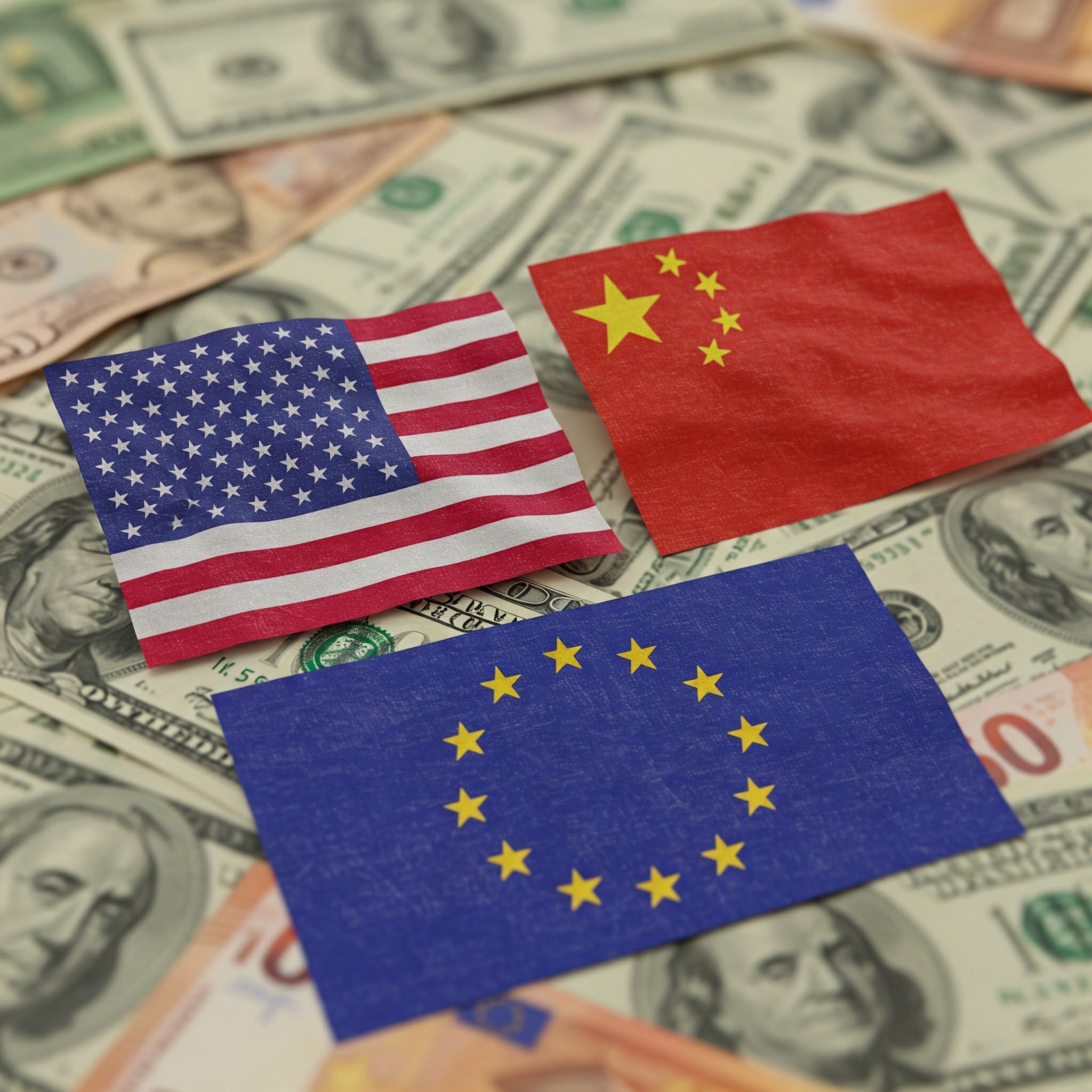
Imagine entering a room where three different conversations are happening simultaneously—each reflecting a unique perspective on what AI can and should be. In the global arena, the United States, China, and the European Union are each speaking their own “language” of AI strategy.
Practical: The U.S. blueprint emphasizes advanced computing infrastructure and economic reindustrialization.
Emotional: China’s vision taps into a national passion for technological prowess and self-reliance, bolstered by strong state support.
Social: The EU’s approach is rooted in ethical considerations, trust, and a desire to build lasting, humane connections through regulation.
We must learn to discern and understand these distinct dialogues if we want to engage with the future of AI.
2. Blueprint for the United States: Democratic AI in Action
Picture a conversation where the emphasis is on balancing cutting-edge innovation with shared prosperity—a dialogue that asks not only “What can we achieve?” but “How do we ensure everyone benefits?” OpenAI’s Economic Blueprint for the U.S. is exactly that conversation.
Key Themes and Initiatives:
Maintaining Leadership & National Security: The U.S. aims to keep its global edge by developing “frontier models” that are both highly advanced and secure.
Equitable Access: The blueprint envisions a system where AI’s benefits aren’t limited to the privileged few but extend across every community.
Investment in Infrastructure: Massive investments in computing centers, data hubs, and chip manufacturing are the backbone of this strategy.
Regulatory Harmony: A unified federal framework for AI regulation ensures that innovation isn’t hampered by fragmented state rules.
3. China’s National AI Development Plans: A State-Led Transformation
Now, shift your focus to a conversation driven by bold, state-sponsored ambition—a dialogue where the nation speaks with a clear, long-term vision. China’s AI blueprint is designed to turn the country into the world’s foremost AI innovation center by 2030.
Key Elements:
Industrial Might & Economic Modernization: With targets set to boost its core AI industry beyond 1 trillion yuan, China is channeling resources into building a self-sustaining AI ecosystem.
Holistic Development: Integrating research, talent cultivation, and strict ethical guidelines (aligned with “core socialist values”), China’s plan is as much about social control as it is about technological advancement.
Strategic Milestones: With clear benchmarks for 2025 and 2030, this blueprint is both a roadmap and a rallying cry for national pride.

China’s strategy isn’t just a list of policies—it’s a passionate, orchestrated effort to mobilize the nation, inviting every citizen to understand and support its vision.
4. The European Union’s Strategy: Trust, Ethics, and Regulatory Excellence
Finally, consider a conversation where the tone is measured, reflective, and deeply human—a discussion about innovation that never loses sight of its ethical backbone. The EU’s AI strategy is built around the twin pillars of “excellence and trust.”
Highlights Include:
A Global Hub for Trustworthy AI: The EU aims to create an environment where AI is developed responsibly, ensuring that safety and human dignity are never compromised.
Robust Investment in Research: With funding programs like Horizon Europe and Digital Europe investing approximately €1 billion per year, the EU is steadily building its capabilities.
The AI Act: A groundbreaking, risk-based legal framework that categorizes AI applications by their potential impact, ensuring balanced oversight.
International Cooperation: The establishment of the EU AI Office underscores its commitment to dialogue and harmonized global standards.
Think of the EU’s strategy as a discussion over a warm cup of coffee, where every statement is weighed not only by its economic impact but by its ethical significance.
5. Comparing the Blueprints: A Multi-Layered Conversation
Let’s bring these conversations together. Imagine a roundtable discussion where each region explains its vision, not just through policies but through stories, emotions, and values.
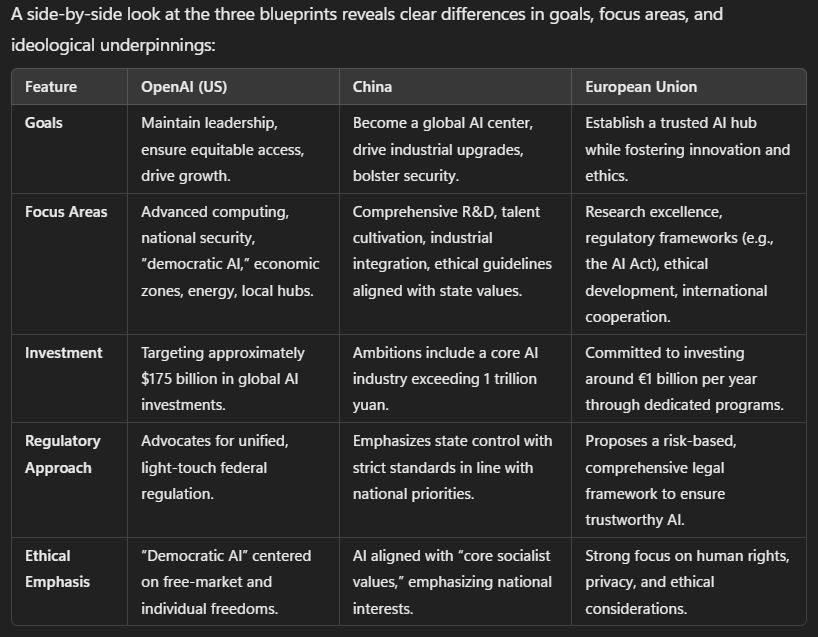
Each blueprint addresses not only the technical “what” but also the “why”—the emotional and social values underlying these strategies.
6. Conclusion: The Clear Path Forward
In the end, the divergent AI economic blueprints of the US, China, and the EU reveal a simple but profound truth: there is no one-size-fits-all approach to harnessing AI’s transformative power.
The U.S. blueprint champions a free-market, democratic approach—innovative and inclusive.
China’s strategy is a bold, state-driven push toward becoming an AI superpower, emphasizing industrial might and national security.
The EU’s plan stands out for its commitment to ethical, human-centered innovation.
For investors, policymakers, and anyone navigating the future of AI, the takeaway is clear: We must understand the practical, emotional, and social dimensions of these strategies. Only then can we truly engage with—and invest in—the future of AI.
Take a moment to reflect on which blueprint resonates most with you, and consider how its underlying values might influence your decisions in the AI-driven world of tomorrow.
Thank you for reading. If you have any questions or would like to discuss these insights further, please leave a comment or reach out directly.